Tikajit Pun was born in a village called Nangi, in the district of Tehsil, Nepal, he enlisted into the 1st Battalion of the 2nd Gurkha Rifles in November 1922, and saw his first active service on the North West Frontier in 1924, being awarded the Indian General Service Medal 1923-24. He served on the frontier again with the battalion in 1937 and was awarded his second IGSM for the 1937-39 campaign. He was granted the Viceroy's Commission in 1937 and transferred to the 3rd Battalion when it was re-raised in 1940. In 1943 as a Subedar in the Chindits, he took part in the First Wingate Expedition, leading a group of very young and inexperienced Gurkha Riflemen behind enemy lines in Burma. Here he performed outstandingly well under very difficult and arduous conditions and ended up being awarded the Indian Distinguished Conduct Medal for his efforts that year. Here is the citation transcript for that award, as recommended by his commander Major R. Bromhead :
Operations in Burma - March - April, 1943.Subedar Tikajit Pun was the senior Gurkha Officer of which was forced through a breakdown in communications and the consequent lack of rations to return across the CHINDWIN under particularly arduous conditions.His energy and devotion to duty were unfailing and on all occasions he set a superb example of cheerfulness in great adversity. It was largely due to his exemplary conduct that his men, despite hunger and exhaustion, regained their base as a formed body and without casualties. He displayed the same qualities of leadership during this difficult march as he had previously shown under fire and was throughout of the greatest assistance to his Commander.
Recommended By
Major R.B.J.Bromhead,
Column Commander,
77 Ind. Inf. Bde Group.
Signed
Brig. O.Wingate
Comdr. 77 Ind. Inf. Bed.London Gazette 19 October 1944. 
For a much more detailed account of the military life and career of Tikajit Pun, please click on the link below. Congratulations must go the gentlemen who produced the website pages, especially Mark Sellar who compiled the information on Tikajit Pun.Tikajit Pun went on to serve with the 2nd Gurkha Rifles after the war in places such as Malaya, he continued to excel and impress during this period. In the photograph opposite he can be seen in the centre of the back row. This photo was taken in the 1950's and is of the 1st battalion 2nd GR, at the Ulu Pandan barracks in Singapore. By this time Tikajit was a Lieutenant in the battalion, but went on to achieve the rank of Captain.
The family tradition of faithful service to the 2nd Gurkha Rifles was continued by his eldest son Lalbahadur, who became the first Gurkha Rifle recruit to attend Staff College, passing out from Sandhurst in 1959. Lalbahadur was awarded the Military Cross in 1965 during the 1st battalion's tour of duty in Indonesia. He led a successful ambush attack on a large group of insurgents just inside the Indonesian border and nullified their future effect on proceedings. Seen below is the full medal entitlement of Captain Tikajit Pun, a real Chindit hero in every sense of the word.
Original Link Source
Copyright © Steve Fogden (and other contributors as stated) 2012.
21:38 |
Posted in
Gorkha,
History,
military,
War,
worldwide,
गोरखा,
शख्सियत
|
Read More »
The first Gurkha soldier to be killed fighting in Afghanistan has been named as Yubraj Rai. The 28-year-old, from the 2nd Battalion The Royal Gurkha Rifles, died on 2008 in the Musa Qala area of southern Afghanistan when a patrol came under attack.Rifleman Rai, from the Khotang district in eastern Nepal, was the first Gurkha soldier to be killed. In October 2008, British Gurkha Major Alexis Roberts was killed in an explosion in southern Afghanistan.
Rifleman Rai was taking part in a joint ISAF and Afghan National Security Forces operation against enemy forces when they came under fire.He was treated at the scene but died from his wounds.The Gurkha was the 122nd member of British forces to be killed in Afghanistan since the start of operations in October 2001.An avid sportsman and Manchester United fan, he followed in the footsteps of his uncle by joining the British Army in January 1999.
Lieutenant Colonel Chris Darby, commanding officer of 2nd Battalion, the Royal Gurkha Rifles, said: "Yubraj Rai was an extraordinary character and a hard professional soldier with a proven operational record."Having served his time as a driving force in 5 Platoon, he moved to a supporting role in Musa Qala, but it was typical of the man that he volunteered for a place on the operation in Dagyan when another member of his company fell ill, and a measure of his professionalism that he did it so seamlessly."
21:51 |
Posted in
Gorkha,
military,
War,
worldwide,
गोरखा
|
Read More »
From the end of the Indian Rebellion of 1857 until the start of World War I the Gurkha Regiments saw active service in Burma, Afghanistan, the North-East Frontier and the North-West Frontiers of India, Malta (the Russo-Turkish War, 1877–78), Cyprus, Malaya, China (the Boxer Rebellion of 1900) and Tibet (Younghusband's Expedition of 1905),World War I (1914–18), World War II (1939–45), In the Second World War, Gurkha strength was expanded to 45 battalions. Soldiers saw action in Iraq, Persia, Cyprus, Tunisia, Italy, Greece, Burma, Malaya and Indonesia.
Exclusive Pictures of Gorkha Soldiers Worldwide
 |
In Borneo Soldiers of 2nd Gurkha rifles manning a machine gun posting 1963-66
 | 7th Gurkha Rifles with an anti-aircraft gun in 1982 Falklands War |
 | | Sgt Bharnabahadur Rai 1st Battalion 10th Gurkha Rifles in the Malayan Jungle |
 | | British, Gurkha ; Sikh officers in Iraq 1941 |
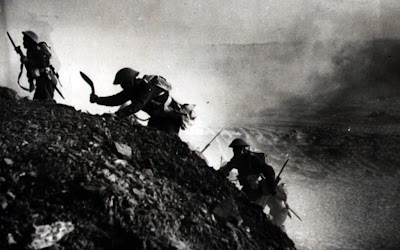 | 2GR North Africa Gurkhas climbing hill in battle (Tunisia 1943)
1/4th Gurkhas at kit inspection showing kukris, Le Sart, France
Some Action with Deadliest Weapon known as khukuri, 1944
British Gurkha uniform and gear in modern-day Iraq, 1918.
With British Royal Prince Harry in Aghanistan
Gurkha in Singapore |
|
00:23 |
Posted in
Gallery,
Gorkha,
History,
military,
War,
गोरखा
|
Read More »
 They're
 used to chasing baboons and elephants off their pitch at home in Kenya, but when a group of cricketing Maasai warriors came to Maidstone yesterday, all they had to contend with was some pigeons. Members of 70 Gurkha Field Squadron - based at Invicta Park Barracks, in Royal Engineers Road - played host to the Maasai Cricket Warriors. The match came after the Gurkhas had helped the Maasai warriors construct a cricket pitch back in Kenya, in Maasailand. After a 1-1 scoreline after two matches, they played a deciding match at the barracks, watched by other members of the regiment - with the Gurkhas emerging victorious. The warriors play in their flowing traditional robes, while the Gurkhas opted for more traditional cricket whites.The warriors are staying in the UK to compete in the Last Man Standing contest at Lords and the Oval after adopting the game as a way of promoting social change within their tribe.
08:02 |
Posted in
Gorkha,
military,
news,
गोरखा,
समाचार
|
Read More »
काठमांडो : नेपाल की सेना में 70 पूर्व माओवादी विद्रोहियों को अधिकारी के तौर पर शामिल किया गया है। इनमें चार महिलाएं हैं। इन लोगों ने अधिकारी बनने के लिए जरूरी नौ महीने का प्रशिक्षण पूरा किया है। भक्तपुर के खरीपाटी स्थित नेपाली सैन्य अकादमी में आयोजित समारोह में आज इन 70 लोगों को सेना के अधिकारी की पदवी दी गई। इस मौके पर चीफ ऑफ आर्मी स्टॉफ जनरल गौर शमशेर राधा तथा दूसरे वरिष्ठ अधिकारी मौजूद थे। इस मौके पर पासिंग हाउट परेड भी हुई जिसके गवाह नेपाल की अंतरिम सरकार के प्रमुख खिल राज रेगमी बने।
21:35 |
Posted in
military,
nepal,
War,
काठमांडो,
नेपाल
|
Read More »
जन्म- 1913 ई., बलिदान- 25 अगस्त, 1944 ई. बलिदान दिवस (25 अगस्त) पर विशेष
शहीद दुर्गा मल्ल का जन्म उत्तर प्रदेश के देहरादून (अब उत्तरांचल) जिले में डोईवाला नामक गांव में सन् 1913 में हुआ था। उनके पिता का नाम श्री गंगाराम मल्ल और माता का नाम श्रीमती पार्वती देवी मल्ल था। दुर्गा मल्ल बाल्यकाल से ही गांव के अन्य लड़कों से भिन्न दिखाई देते थे। माता-पिता के आज्ञाकारी, पढ़ने और खेलकूद के शौकीन। उन्हें अपने गोरखा समाज की दुर्दशा देखकर दु:ख होता था। उन दिनों गोरखा समाज की स्थिति ठीक नहीं थी। दुर्गा मल्ल विद्यार्थी जीवन से ही पराधीन भारत के प्रति व्यथित रहते थे। अत: विद्यार्थी जीवन में ही स्वाधीनता संग्राम में शामिल हो गए थे। उनके आदर्श थे ठाकुर चन्दन सिंह, वीर खड्ग बहादुर सिंह बिष्ट, पंडित ईश्वरनन्द गोरखा, अमर सिंह थापा इत्यादि। उन पर गांधीवादी स्वतंत्रता संग्रामियों का भी प्रभाव था। गोरी सरकार का दमनचक्र स्वतंत्रता संग्रामियों पर तेजी से होने लगा था। अत: सभी आंदोलनकर्ता पुलिस की आंखों में धूल झोंककर देहरादून छोड़कर अन्य स्थानों पर चले गए।
दुर्गा मल्ल भी अपने रिश्तेदार के यहां धर्मशाला चले गए, इस कारण दुर्गा मल्ल की पढ़ाई छूट गई। कुछ समय पश्चात् वे सन् 1931 में स्थानीय पलटन 2/1 गोरखा राइफल्स में भर्ती हो गए। तब दुर्गा मल्ल केवल अठारह वर्ष के युवक थे। उन्हें संकेत प्रशिक्षण के लिए महाराष्ट्र भेज दिया ही गया। लगभग 10 वर्ष तक सेना में सेवारत रहने के पश्चात् जनवरी, 1941 में युद्ध के लिए विदेश जाने से पूर्व अपने घरवालों से विदा लेने धर्मशाला गए, और वहीं (धर्मशाला) ठाकुर परिवार की कन्या शारदा देवी के साथ उनका विवाह हो गया। अप्रैल 1941 में दुर्गा मल्ल की टुकड़ी सिकन्दराबाद पहुंची जहां से उसे आगे विदेश रवाना होना था। 2/1 गोरखा बटालियन के अतिरिक्त अन्य गोरखा बटालियनें भी सिंगापुर पहुंच चुकी थीं। दिसम्बर 1941 में जापानियों ने दक्षिण पूर्व एशियाई क्षेत्र में तैनात मित्र सेना पर हमला करके युद्ध की घोषणा कर दी।
इस बीच आजाद हिन्द फौज का गठन हुआ जिसमें तीन प्रमुख गोरखा बटालियनों की भूमिका रही थी। आजाद हिन्द फौज में पन्द्रह हजार अधिकारी और सिपाही थे। भारत को आजाद कराने के आह्वान पर दुर्गा मल्ल भी आजाद हिन्द फौज में शामिल हो गए। इनकी कार्य कुशलता देखकर नेताजी सुभाष चन्द्र बोस ने दुर्गा मल्ल को गुप्तचर विभाग का कार्य भार सौंपकर कप्तान बनाया। बाद में उन्हें विशेष अभियान के लिए भारत-बर्मा सीमा पर नियुक्त किया। मणिपुर के उखरूल नामक स्थान पर 27 मार्च, 1944 के दिन मेजर दुर्गा मल्ल शत्रु के घेरे में फंस गए। दुर्गा मल्ल को युद्धबन्दी के रूप में दिल्ली में लालकिले के बन्दीगृह में रखा गया। इनके विरुद्ध सैनिक अदालत में मुकदमा चलाया गया। 25अगस्त, 1944 को दुर्गा मल्ल को फांसी दी गई। और इस तरह उन्हें आजाद हिन्द फौज के प्रथम शहीद होने का गौरव प्राप्त हुआ।
00:57 |
Posted in
Dehradun,
Gorkha,
military,
War,
गोरखा,
शख्सियत
|
Read More »
Times of India
DARJEELING: The latest round of agitation in the hills of West Bengal for a separate state of Gorkhaland is getting support from elements in a neighbouring country, according to military intelligence reports. A defence ministry team met senior army officers who are supervising the India-China border in the northeast and asked the army intelligence to review the situation, particularly after some satellite phones, which went missing a few years back, were tracked recently during surveillance. Sources said the Sikkim government had bought 20 Israel-made satellite phones in 2003 for better connectivity in the remote areas. Four of these phones went missing later. A few months ago, one of these phones suddenly pinged on the military intelligence surveillance.
It was tracked near the Lebong cantonment area on the outskirts of Darjeeling, but the signals stopped before MI could zero in on the source. Days later, the Gorkhaland agitation swept the hills. Reports prepared by intelligence agencies corroborate that some senior Gorkhaland activists visited Nepal's Illam district (just across Darjeeling subdivision) just months before the fresh movement. "We have identified four persons who went to Illam," said a senior administrative officer, who has also submitted a report to the home department on the movement of an armed revolutionary faction of the Nepal Maoists in the area. "Darjeeling subdivision shares a porous border with Illam. Recently, the district administration was reviewing a drinking water project in Sukia block when the cross-border movement of Nepal-based Left rebels was reported," said a home department official. Protests in front of the Indian mission in Kathmandu have given credence to the intelligence reports of cross-border support to the movement.
There are fears of a rerun of the bloodshed of the late '80s and '90s, when Subash Ghisingh had used ex-servicemen in his armed struggle. The Army is already thinking of reaching out to military veterans in Darjeeling to persuade them not to join a violent movement. Sources said at Monday's meeting, army officers spoke of a neighbouring country's interest in the Gorkhaland movement as in the mid-'80s. "During the GNLF movement, an influential family in Nepal had extended support to GNLF chief Subash Ghisingh. The GNLF had used thousands of ex-army personnel to start an armed movement. At that time the Indian Army mapped out 'chor batos' (hidden hilly passes) used by the rebels to attack policemen.
They also started a social bonding operation to reconnect with ex-army personnel and neutralise them," said an army officer, pointing out that such social bonding is needed now to isolate army veterans from any anti-state movement. Military intelligence also pointed out that on Sunday, a huge crowd led by Nikendra Gurung demonstrated in front of the Indian embassy in Kathmandu demanding Gorkhaland. A section of the Nepal media is campaigning in favour of Gorkhaland and accusing the Bengal government of using "repressive power against Gorkhaland activists". Morcha chief Bimal Gurung, however, denied any link with Nepal Maoists. He said that his statehood movement is non-violent and accused the government of trying to malign it. Meanwhile, the hills observed the 'stay-home' agitation with streets wearing a deserted look in Darjeeling.
21:28 |
Posted in
darjeeling,
military,
news,
गोरखालैंड,
दार्जिलिंग
|
Read More »
Lt Col V S Thapa, an unmanned aerial vehicle (UAV) external Test pilot, hailing from Dehradun, will command this year's Defence Research and Development Organisation's (DRDO) Republic Day parade contingent in New Delhi in 2012. Thapa, is presently posted on a special assignment to Bangalore-based Aeronautical Development Establishment (ADE) – which is the abode of home-grown UAVs, including Nishant and Rustom. Thapa said that it was a very esteemed occasion for him to command the unit. “It is a lifetime opportunity that has come my way and I am working hard to make it a success.
The rehearsals have been good and we have fine-tuned everything before the big day,” the 45-year-old Thapa said. Thapa hit the headlines after conventionally flying Rustom-1 UAV for the first time in October 2010, and so far has piloted (externally) nine flights of Rustom-1. An officer from the Regiment of Artillery of the Indian Army, Thapa is certified as an external pilot from Israeli Aerospace Industries, Malat, Israel. He is part of Army's UAV team since 2000 and has handled Searcher Mk-I Alpha and Searcher Mk-II UAVs. Thapa is married to Puja with the couple having a daughter Bani, studying in 7th standard.
Thapa was selected to lead the 2012 R-Day contingent after a vigorous selection process. “There were four other officers in the race and Thapa was selected after scrutinizing various parameters,” sources said. ADE Director P S Krishnan said that the lab couldn't have asked for more with a member of his team being chosen to command the DRDO R-Day team. “A double honour for us, with Thapa and Rustom-1 chosen for the parade. The UAV by itself can be used for various reconnaissance purposes, though it is a technology demonstration vehicle for Rustom-2,” Krishnan said. In addition to Rustom-1, Thapa will have in his company missiles Agni-4 and Prahaar, in addition to a tableau depicting gen-next technologies used while handling hazards of snow and avalanches.
23:17 |
Posted in
Gorkha,
military,
War,
गोरखा
|
Read More »
मुम्बई : स्वाधीनता दिवस से ठीक एक दिन पहले हुए भीषण हादसे में मुम्बई के कड़ी सुरक्षा वाले सैन्य क्षेत्र में बीती आधी रात को नौसेना की एक पनडुव्बी में भीषण विस्फोट के बाद आग लग गई। इसमें 18 नौसैनिक सवार थे। आईएनएस सिंधुरक्षक पनडुव्बी में हुआ यह विस्फोट इतना भयावह था कि मुम्बई में नौसेना की गोदी और उसके आसपास का इलाका दहल गया और समुद्र के पार का आकाश इस धमाके की चौंध से भर गया।
हादसे के तुरंत बाद 16 दमकलों को भेजा गया और तड़के करीब 3 बजे तक आग पर काबू पा लिया गया, लेकिन तब तक पनडुव्बी लगभग स्वाहा होकर डूब चुकी थी और उसका कुछ ही हिस्सा पानी की सतह पर दिख रहा था। नौसेना के गोताखोरों और अन्य राहत दल को मौके पर भेजकरपनडुव्बी में सवार 18 नौसैनिकों का पता लगाने के प्रयास किए जा रहे हैं। सूत्रों के अनुसार पनडुव्बी के भीतर विस्फोट आधी रात के तुरंत बादहुआ और पूरी पनडुव्बी आग के गोले में तव्दील हो गई। सिंधुरक्षक के पास नौसेना की दूसरी पनडुव्बी आईएनएस सिंधुरत्ना भी तैनात थी, जिसे तुरंत सुरक्षित स्थान पर ले जाया गया।
नौसेना की पनडुव्बी में यह विस्फोट ऐसे समय हुआ है जब स्वाधीनता दिवस के मौके पर पूरी मुम्बई के समुद्रतटीय इलाके में हाई अलर्ट था। इस हादसे के बाद नौसेना के सभी प्रतिष्ठानों को सतर्क कर दिया गया है। हादसे की जांच के आदेश दे दिए गए हैं और विस्फोट के कारणों का पता लगाया जा रहा है। भारतीय नौसेना को यह भारी झटका दो बड़ी उल्लासपूर्ण घाटनाओं के बाद लगा है। पिछले शनिवार को नौसेना की परमाणु पनडुव्बी का परमाणु रिएक्टर चालू किया था और इसके बाद 12 अगस्त को स्वदेशी विमानवाहक पोत आईएनएस विक्रांत के जलावतरण से पूरी नौसेना में जश्न था।
23:03 |
Posted in
military,
news,
War,
समाचार
|
Read More »
- Lt. General Shakti Gurung, Serving, G.O.C Recruitment, Dehradun
- Lt. General GS Rawat, 5th Gorkha Rifles, Retd, Nainital
- Lt.General RS Pradhan, Para Regiment, Serving, Dehradun
- Major General OS Bhandari, Param Vishist Seva Medal, Dharamshala.
- Major General MS Karki, Engineers, Dehradun, retd
- Major General Basant Singh, AVSM, YSM, 1/1 Gorkha Rifles, Retd 31 Jan 2004, Dehradun
- Major General NS Rana, Vishist Sena Medal, Sappers, retd. Dharamshala
- Major General PCS Khati, Serving 1 GR, Vir Chakra
- Major General Umesh Kumar Gurung , YSM Infantry / Headquarters I.G Assam Rifles (SOUTH)
Footnotes 1. [ Approved for promotion as Lt General but died in an air crash]
Pictures of Some Notable Gorkha Generals In Indian Army |
| Major General OS Bhandari |
 |
| Lt. General GS Rawat |
|
|
|
 |
| Lt. General Shakti Gurung |
 |
| Major General Basant Singh |
 |
| Lt Gen RS Pradhan |
(This content has been found by internet, so if any Correction please tell me on deepthink786@gmail.com)
00:46 |
Posted in
Gorkha,
Gorkha Generals,
military,
War,
गोरखा
|
Read More »
PTI
DEHRADUN: A total of 631 cadets passed out of the Indian Military Academy here today after completing the rigorous course to join the Indian Army as officers. Before being formally commissioned into the Army, the cadets walked in files at the famed Drill Square set against the historic Chetwode Building of the Academy as the Air Chief Marshal NAK Browne took the ceremonial salute. Apart from the 631 Indian cadets, 74 cadets from India's friendly neighbour countries also passed out today to join the armies of their respective countries. A maximum of 112 officers are from Uttar Pradesh followed by Haryana with 60 and Uttarakhand with 52. Addressing the cadets after the conclusion of the ceremonial parade, Marshal Browne extended his felicitations to the gentlemen cadets and said they were fortunate to have trained at the IMA known for its high standards of training.
Asking them to constantly bear in mind their twin roles as warriors and protectors, he said they belong to the last bastion of the country and cannot ever afford to let their country down. Congratulating the passing out cadets from neighbouring countries for successfully completing their training at the famed institute, Marshal Browne hoped they would use the skills learnt at the IMA to serve their respective nations. After the ceremonious POP, all the cadets regrouped at a ground of the academy where the pipping ceremony was held. They were later administered oath to the Constitution by the adjutant of the IMA. It started raining just when the parade was about to begin at 7 a.m. this morning delaying the start by over an hour. However, the showers failed to dampen the spirit of the parents and kin of gentlemen cadets who said the rain only helped in making the occasion all the more memorable.
05:51 |
Posted in
Dehradun,
military,
उत्तराखंड
|
Read More »

- Regimental Centre: Lucknow, Uttar Pradesh.
- Regimental Insignia: A pair of crossed Khukris (a Gorkha dagger) with the Roman numeral XI in-between.
- Motto: New Motto - Yatraham Vijayastatra (I - The Metaphor for Victory).
............Old Motto - Nisswarth Kartavya (Selfless Duty). - War Cry: At the time of inception, the battle cry adopted by the Regiment was Ayo Gorkhali (The Gorkhas Are Here) followed by 'Charge'. However, upon the raising of the 2/11 Gorkha Rifles in 1963, the then Commanding Officer desired that the unit battle cry be Jai Mahakali, Ayo Gorkhali (Victory to Mahakali, The Gorkhas Are Here). This cry was first raised by the Adjutant on the raising day on the occasion of the first flag hoisting at the unit Quarter Guard. Goddess Durga is known in this Regiment as Mahakali and invoking her blessings on the battlefield has imbibed itself deep in the troops. Additionally, the battle cry apart from infusing daring courage in the men, also helps create psychological fear in the enemy.
- Theatre Honours: Kargil - 1999.
- Battle Honours: Shingo River, Bogra and Batalik.
- Honours & Awards: 1 Param Vir Chakra, 3 Ashok Chakras, 1 Padma Bushan, 6 Param Vishist Seva Medals, 2 Maha Vir Chakras, 8 Ati Vishist Seva Medals, 11 Vir Chakra, 4 Shaurya Chakras, 30 Sena Medals, 14 Vishist Seva Medals and 18 Mentioned-in-Despatches.
- Comments: The history of the 11th Gorkha Rifles in fact dates back to the year 1918. Four battalions were raised in Mesopotamia and Palestine in May 1918 by pooling companies from other Gorkha Regiments and Garwhal Rifles. These battalions also saw action in the Third Afghan War. These battalions were later demobilised from the the Indian Army.
At the time of Independence when the division of the Indian Armed Forces was being done the question of the future employment of Gorkha troops also came up. At that time there were ten Gorkha Regiments in the Indian Army, each with two battalions. To settle the issue the Govt. of India, Nepal and Britain considered the matter and a Tripartite Agreement was signed on 09 November 1947. As per this agreement the 2nd, 6th, 7th, and 10th Gorkha Rifles were transferred to the British Army while the remaining six Gorkha Regiments were to continue service with the Indian Army. Troops of the 7th and 10th Gorkha Rifles hailed from Eastern Nepal and were mainly of Rai and Limbu ethnic groups.
Transfer of troops to the British Army was to be on a purely voluntary basis. A referendum was held in the presence of the representatives of the Indian and Nepalese Governments. Troops from the 7th and 10th Gorkha Rifles opted against the transfer to the British Army in large numbers. 2/7 GR - located at Santa Cruz, Mumbai - as a whole opted against transfer to the British Army. There was no Gorkha Regiment, left in the Indian Army with troops from Eastern Nepal. Keeping in mind the large numbers of non-optees and their fighting qualities it was decided to re-raise the 11th Gorkha Rifles. Official orders to raise the 11 Gorkha Rifles, it's Regimental Centre and two battalions, the Third and the Fourth at Palampur were issued in December 1947. Subsequently on 01 January 1948, the Regimental Centre and 3/11 GR (with strength from 2/7 GR) were raised at Palampur and Santa Cruz, Mumbai respectively. In 1948, as the number of non-optees increased the 4/11 GR and the 5/11 GR were also raised.
Major Harnarain Singh Chauhan was commissioned into the Rajput Regiment in 1937. In December 1947, Major HS Chauhan, accompanied by Captain SD Sawhney reached Palampur to take over the 'non-optees' of the 7 and 10 Gorkhas. He arrived with the broad vision of 'fathering' a Gorkha Regiment – the first Regiment in Independent India. To him goes the credit of smooth transition. To him also goes the credit of even meeting the cash requirements of the Regiment from his private resources until funds were built up. It was a matter of 'izzat' for him. To him goes the credit of the present Regimental Flag and Cap Badge, and above all, laying the foundation of a great Regiment. Later the 1/11 GR and 2/11 GR were raised on 01 September 1960 and 11 January 1963 respectively. The 107 Inf Btn (TA) affiliated to the Regiment was raised on 01 October 1960. The 6/11 GR and the 7/11 GR were raised after the 1962 Chinese invasion.
Lieutenant Manoj Kumar Pandey, 1/11 GR, is the first and only recipient of the Param Vir Chakra (Posthumous) for the Regiment, in the 1999 Kargil conflict. He is the Indian Army's first Lieutenant to be awarded the Param Vir Chakra. 2nd Lieutenant Puneet Nath Datt, 1/11 GR, was the second recipient of the Ashoka Chakra for the Regiment in 1997. The first recipient of the Ashoka Chakra is not known. The third recipient of the Ashoka Chakra was Paratrooper Sanjog Chhetri of 9 Para, who was originally from 5/11 GR before he volunteered to join 9 Para. Though the award obviously goes to the tally of 9 Para, a Coffee Table book recently published by 11 Gorkha Rifles also counts it in its tally. Battalions of the 11 Gorkha Rifles have participated in practically all operations undertaken by the Indian Army since Independence, i.e. 1947-48 Indo-Pak War, Hyderabad (1948), 1965 Indo-Pak War, Chola (1967) and the 1971 Indo-Pak War. The 1/11 GR and the 2/11 GR have operated with distinction in anti-militant operations in Assam and Jammu & Kashmir and won unit citations with the COAS' Scroll of Appreciation.
(Bharat Rakshak)
00:50 |
Posted in
Gorkha,
military,
War,
गोरखा
|
Read More »


.jpg)


